The Criminal Justice program at Stockton University helps students understand the systems that respond to crime and victimization, including policing, courts, corrections, and victim services through a social science lens. This bachelor’s degree builds critical thinking, research and analytical skills for careers in criminal justice, public safety, legal services, victim services, and related fields.
In addition to aspects of the criminal justice system, students study criminology theory, criminal justice research methods, ethics, and social inequality. Internships, research opportunities, and career-focused events help students connect classroom learning to real-world settings and prepare for careers in federal and local agencies in policing, courts, corrections, and victim services and/or future graduate study.


Endorsed by the Academy of Criminal Justice Sciences
Your Future in Criminal Justice Starts Here
What makes Stockton University’s Criminal Justice program stand out?
Stockton University’s Criminal Justice program was the first in the nation to earn endorsement from the Academy of Criminal Justice Sciences for academic quality. The program combines criminology theory, criminal justice research, and applied learning to help students understand offending and victimization, policing, courts, and corrections while developing critical thinking and analytical skills used in real-world criminal justice careers.
What will I study as a Criminal Justice major?
Students study criminological theory, victimization and criminal behavior, law enforcement practices, court systems, and correctional institutions. Coursework also includes criminal justice research methods, statistics, and policy analysis, helping students understand crime and victimization trends, legal systems, and the role of public policy in shaping justice outcomes.
Are there concentration options within the Criminal Justice program?
Yes. Criminal Justice students can choose a concentration in Forensic Psychology, Forensic Investigation, or Homeland Security. These concentrations help students focus their studies in areas such as criminal behavior, forensic evidence, crime scene investigation, terrorism studies, federal law enforcement, disaster management and emergency preparedness while building a strong foundation in criminal justice.
Does the program include internships or hands-on experience?
Yes. Students can participate in criminal justice internships with law enforcement agencies, courts, and community organizations. These experiences include supervised fieldwork, research projects, and professional skill development, helping students apply criminology concepts, build workplace experience, and explore career paths before graduation.
What kind of careers can I pursue with a Criminal Justice degree?
Graduates pursue careers in law enforcement, federal agencies, corrections, and legal and victim services. Common paths include roles in law enforcement, probation and parole services, forensic analysis, victim services, and supporting the criminal justice system via the courts, and private security. Graduates may also pursue careers with federal agencies, like the FBI or DEA. The program also prepares students for graduate study in criminology, law, or public administration.
Program Faculty

Deeanna Button

Christopher Baia

Jess Bonnan-White
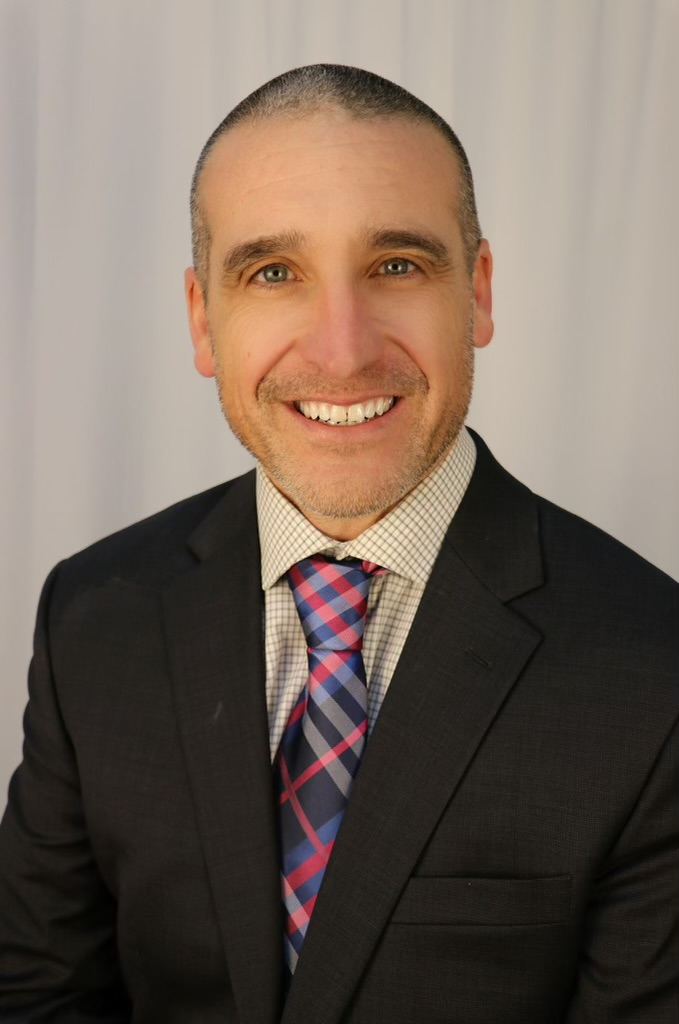
William Dineen

Joshua D. Duntley

Syeda T. Hadi

Janice O. Joseph

Katherine Kafonek

Marissa P. Levy

Ruibin Lu

Manish Madan

William McKnight

Richard Mulvihill

Kimberley R. Schanz

Amy Yingyi Situ-Liu

Barbara LeClair

Christine Tartaro
Program Mission & Vision
The vision of the Criminal Justice program is to provide a broad knowledge of the criminal justice system while providing students with content on the specific trends, challenges, and advances in the field. In order to do that we:
- Ensure our curriculum is current and course content is up to date.
- Assess content in all core courses and make adjustments.
- Provide students with relevant opportunities to participate in academic and career development programs, including the Criminal Justice Career Series.
- Provide students with vital information and career opportunities via email, Facebook, LinkedIn, and Twitter.
- Work together as faculty to create by-laws and a governing structure for our program to ensure all faculty have a voice.
The Criminal Justice program mission aligns with the University mission.
Dual BS/MA Degree in Criminal Justice
The Dual BS/MA Degree Program in Criminal Justice is designed to offer students a broad, multidisciplinary and multidimensional perspective of the criminal justice system. Students will embark on an intensive academic experience for five years. This program includes all of the liberal arts courses that all Criminal Justice students at Stockton are expected to take, plus all the undergraduate and graduate core Criminal Justice classes.
Students have the choice of either completing the requirements for the Master's Degree as a generalist student, or they may choose to take courses to complete a track in Forensic Psychology, Victimology and Victim Services, and Justice Studies.
This is an intense program. To ensure the successful completion of the program working many hours outside of school is not recommended. New students may apply for dual-degree status by checking the box for dual degree on the admissions application. Current first-year Stockton students who are interested in switching to the dual degree program must contact the coordinator of the dual degree program, Dr. Kimberley Schanz. Once accepted into the program, students may decide to major in something other than Criminal Justice or graduate with a B.S. degree only, by notifying the Criminal Justice program and the University in writing.
Eligibility
Two types of students may apply for admission to the dual degree program in criminal justice:
High School Seniors
Students expressing an interest in the dual degree program in Criminal Justice must :
- have a 3.7 GPA from high school, AND,
- demonstrate math, writing, and reading readiness through either:
- Accuplacer scores of 255 Math, 250 Writing, and 250 Reading, OR
- 570/24 Math SAT/ACT, and 520/20 Reading /Writing SAT/ACT
For students who do not submit SAT/ACT scores, they will be conditionally accepted to CRIM Dual Degree based on their high school GPA. They will be officially accepted into the dual degree program once their Accuplacer scores are in and they meet the above criteria.
Once enrolled at Stockton, students will have to maintain a GPA of 3.3 each semester in order to maintain their eligibility in the dual degree program.
Criminal Justice students who are already enrolled at Stockton but were not admitted to dual degree as incoming freshman may apply to dual degree immediately following the completion of freshman year if they have maintained at least a 3.3 GPA each semester.
Transfer Students
These students may apply for early, conditional admission if they have a GPA of at least 3.3 from their sending institution. Students will be expected to maintain a minimum GPA of 3.3 each semester in order to maintain eligibility in the dual degree program. The program will accept a maximum of 64 undergraduate transfer credits, but students with that many transfer credits will likely have to take either summer classes or an extra semester to graduate on time. (Students entering Stockton with an Associate's Degree will have 64 credits by the end of their sophomore year, but dual degree candidates will have completed or need to complete at least 68 credits by that time.)
All students must complete their General Studies and non-social and behavioral science electives by the end of their junior year. By the time students begin to take graduate courses in their senior year, they should have at most six credits of cognates (social and behavioral science courses) remaining.
HOW TO APPLY
Students apply as undergraduates through the Office of Enrollment Management as part of the regular freshman or transfer student admission process.
Current first-year Stockton students should contact Dr. Kimberley Schanz directly to determine eligibility.
Contact
Kimberley Schanz, Associate Professor of Criminal Justice
Office: F128 I Phone:609-652-4585
Email:kimberley.schanz@stockton.edu
Forensic Science Certificate
The Forensic Science Certificate Program is designed to provide a focus for those students who are interested in pursuing a career in forensic science. This program is specially designed for students majoring in Chemistry, Biochemistry or Biology and for those who have already graduated but would like to pursue a career in forensic science by taking additional courses. Criminal justice majors may also complete the program.
A student who completes the program will be knowledgeable about the criminal justice system, a systematic search at the crime scene, proper procedures for collection, packaging and preservation and transportation of physical evidence, methods of analysis of physical evidence using the knowledge of science and the significance of expert witness testimony.
View the Academic Bulletin for more information on Forensic Science Certificate
Special Programs
Program Internships
The Criminal Justice Internship Program is a cooperative effort between Stockton's Criminal Justice Program and public or private criminal justice agencies. Internships give students the opportunity to apply their Criminal Justice education to actual work situations. Students will apply the knowledge and skills learned in the classroom to supervised work experiences at selected agencies, working under the supervision of both Criminal Justice faculty members and professionals in the field. Internships are available in the Fall, Spring, and Summer semesters.
Students will:
- Gain practical, on-the-job experience in professional settings
- Clarify career goals and assess readiness to enter a chosen profession
- Integrate knowledge learned in the classroom with real-world employment situations
For more information and to apply, please visit SOBL Academic Internships webpage.
Stockton also offers a Washington Internship Program in which many Criminal Justice students participate. Learn more about the Washington Internship Program.
Stockton CSI Camp
 The Stockton CSI summer camp is designed to immerse high school students in the process of investigating a criminal
case and bringing it to trial.
The Stockton CSI summer camp is designed to immerse high school students in the process of investigating a criminal
case and bringing it to trial.
Campers investigate a staged homicide scene, request forensic analyses on the evidence
they collect, question witnesses, prepare a case for trial, and present the case in
front of a mock judge and jury. Every step of the way, the campers learn from professionals
in the field, including police investigators, criminologists, forensic psychologists,
attorneys, medical examiner investigators, and corrections officers. There are also
two field trips -- one to the county medical examiner's office and another to the
county jail.
Contact:
Joshua Duntley, Associate Professor of Criminal Justice
Office: G250 | Phone: 609-626-3570 | joshua.duntley@stockton.edu
Christine Tartaro, Distinguished Professor of Criminal Justice
Office: G252 | Phone: 609-626-6035 | christine.tartaro@stockton.edu
Independent Studies
Students can work with faculty to develop highly individualized and rigorous learning experiences for academic credit. Learn more about Stockton’s Independent Study program.
Service-Learning
Stockton offers a robust service-learning program. Service-learning is a form of hands-on education that allows students to serve the community while applying the academic material covered in a specific course. Learn more about service-learning opportunities at Stockton.
Study Abroad
Criminal Justice students can complete part of their education abroad through Stockton’s international programs. Learn more about education abroad opportunities.
Build Skills for Impact in Criminal Justice
Students in Stockton University’s Criminal Justice program develop a deep understanding of how the justice system operates and how it affects individuals and communities. Through coursework in criminology and victimology, policing, courts, and corrections, students learn to analyze crime, evaluate policy, and understand the relationships between diverse populations and the justice system. The program emphasizes critical thinking, research skills, and the application of criminological theory to real-world issues, preparing graduates for careers as practitioners, advocates, researchers, and leaders in criminal justice and related fields.
Student Testimonials
I've gained a vast knowledge of our legal system and the overall structure of prisons and jails. I've also gained a lot of connections through professors who used to be police officers and state troopers.

By providing me with interesting and thought-provoking classes, my growth and certainly love for the criminal justice field has broadened tremendously. The staff wants students to succeed and often will offer off-hour meetings to help any interested students, which I often take full advantage of.

When I was a junior in high school I had about 50 colleges on my list, ranging from California to Florida to Maine... I knew pretty quickly after attending the IDD, visiting campus, and meeting professors and faculty that Stockton University was the right school for me. I fell in love with Stockton’s location nestled within the Pine Barrens, the “schmedium” campus size, and how incredibly kind and caring everyone was.

Career Information
{{ studyArea.title }}
{{ studyArea.type }}