BCWEP Practicum Information
BCWEP Practicum Expectations for Students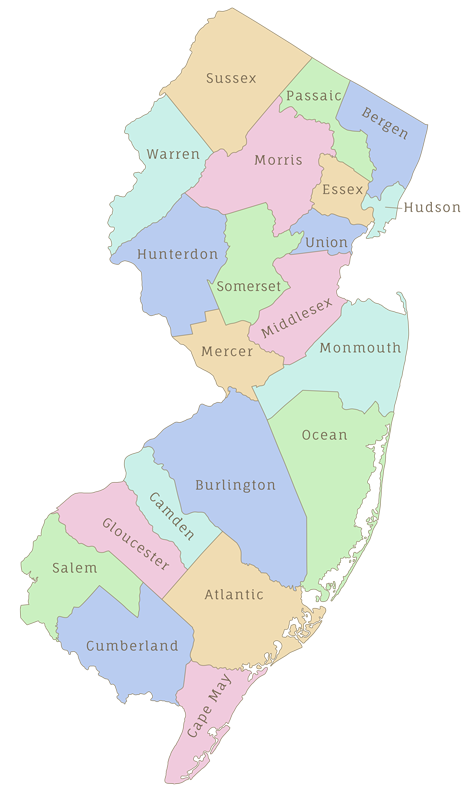
- BCWEP Trainees are expected to complete their practicum hours at a local DCPP office.
- During the application process, students provide three (3) county preferences in which they would like to do their practicum. Placement in a local office that requires a commute up to an hour is a real possibility, so it is important to research the offices and counties when choosing the county preferences. The BCWEP staff work diligently to place students within a reasonable distance, but it is possible to have a longer commute.
- BCWEP Trainees are expected to report to the local office during the standard business hours of 9am-5pm approximately two (2) days per week to stay on target for completion of the practicum hours requirement (minimum 400 hours for the year).
- BCWEP Trainees are expected to begin their practicum once their school year begins. Some universities begin in late August and the rest begin in September.
- BCWEP Trainees participate in a specialized Work Readiness Training curated by BCWEP and the DCF
Office of Training and Professional Development (OTPD).
- These trainings are typically scheduled on Fridays to not conflict with classes. They are a mix of virtual and in--person trainings throughout the state.
- In-person trainings occur at the DCF Professional Center in New Brunswick or at a partner institution.
- BCWEP Trainees also participate in an orientation and mid-year meeting, which are typically held at a partner institution.
- The BCWEP Calendar is provided to students at the orientation and is always available online for quick reference.
- BCWEP Trainees will be provided DCF e-mail addresses, and usernames to access the DCF systems. This experience requires proficient typing, use of computers, and familiarity with Microsoft Office products such as Word, Teams, other online systems.
Click to expand and view a practicum schedule for a month at-a-glance. Students and Practicum Instructors will determine the days of the week that work best for both of them.
Sample Calendar
Below is an example of a monthly calendar with potential trainings to provide a visual of what the committment would look like in a given month:
| Monday | Tuesday | Wednesday | Thursday | Friday |
| Practicum 9-5pm |
Practicum 9-5pm Weekly Supervision |
|||
| State Holiday - Office closed |
Practicum 9-5pm Weekly Supervision |
BCWEP Work Readiness Training | ||
| Practicum 9-5pm |
Practicum 9-5pm Weekly Supervision |
|||
| Practicum 9-5pm |
Practicum 9-5pm Weekly Supervision |
|||
| Practicum 9-5pm |
Practicum 9-5pm Weekly Supervision |
BCWEP Practicum Instructors Expectations
Who can be a BCWEP Practicum Instructor?
Practicum Instruction is voluntary and requires the approval of the Local Office Manager with the knowledge of the Assistant Area Director, who facilitates the assignment of student interns. Interested participants should be committed to participate fully in the educational and professional development of the student. Interested staff members should:
- Have an MSW or BSW degree
- Have at least two years of post graduation professional social work experience
- Currently hold a supervisory position or equivalent within DCP&P such as Supervisor, Case Practice Specialist or Casework Supervisor. Non-supervisory staff who have an MSW and are interested in being a mentor or task supervisor are encouraged to participate.
- Have a desire to mentor students and help identify appropriate learning opportunities within the agency that can be utilized to enhance the student’s knowledge and practice skills
- Be willing to work collaboratively with the Campus Academic Coordinator.
What do Practicum Instructors do?
Practicum Instructors play an essential role in the educational and professional development of students who are completing social work internships at DCP&P and are often the first step in introducing the social work student to the profession. Students are required to complete a practicum of at least 400 hours (approximately 2 days a week).
BCWEP Trainees are expected to begin their practicum once their school year begins. Some universities begin in late August and the rest begin in September. The practicum experience should conclude in May at the end of the spring semester.
Practicum instructors agree to provide regular (generally one hour a week) individual or group supervision to students. To broaden students’ experiences, practicum instructors may assign students to work with other DCP&P staff; but the responsibility for providing oversight of the students’ learning remains with the practicum instructor. Practicum instructors are also responsible for the following:
- Clarifying mutual expectations about roles, responsibilities, work schedule, method of documenting hours worked, etc.
- Providing the student with an orientation to the agency, including agency structure, authority, and linkages to community, institutions, and agencies.
- Helping the student to become comfortable in the agency setting and to manage anxieties about performance
- Developing, with the student’s input, a BCWEP Competency-Based Learning Plan
- Providing the student with opportunities to participate in a variety of activities designed to produce effective social workers in child welfare
- Conducting an ongoing assessment of the student’s learning
- Giving the student progressively more responsible roles as the student develops confidence and competence—and assuring that the student does not attempt to practice outside of a student’s scope of practice
- Completing an assessment of the student’s learning at the end of the internship for purposes of tracking outcomes of BCWEP
- Completing a questionnaire or interview, giving feedback to BCWEP staff on the practicum instructor’s experience with BCWEP.
Click to expand and view a practicum schedule for a month at-a-glance. Students and Practicum Instructors will determine the days of the week that work best for both of them.
Sample Calendar
Below is an example of a monthly calendar with potential trainings to provide a visual of what the committment would look like in a given month:
| Monday | Tuesday | Wednesday | Thursday | Friday |
| Practicum 9-5pm |
Practicum 9-5pm Weekly Supervision |
|||
| State Holiday - Office closed |
Practicum 9-5pm Weekly Supervision |
BCWEP Work Readiness Training | ||
| Practicum 9-5pm |
Practicum 9-5pm Weekly Supervision |
|||
| Practicum 9-5pm |
Practicum 9-5pm Weekly Supervision |
|||
| Practicum 9-5pm |
Practicum 9-5pm Weekly Supervision |